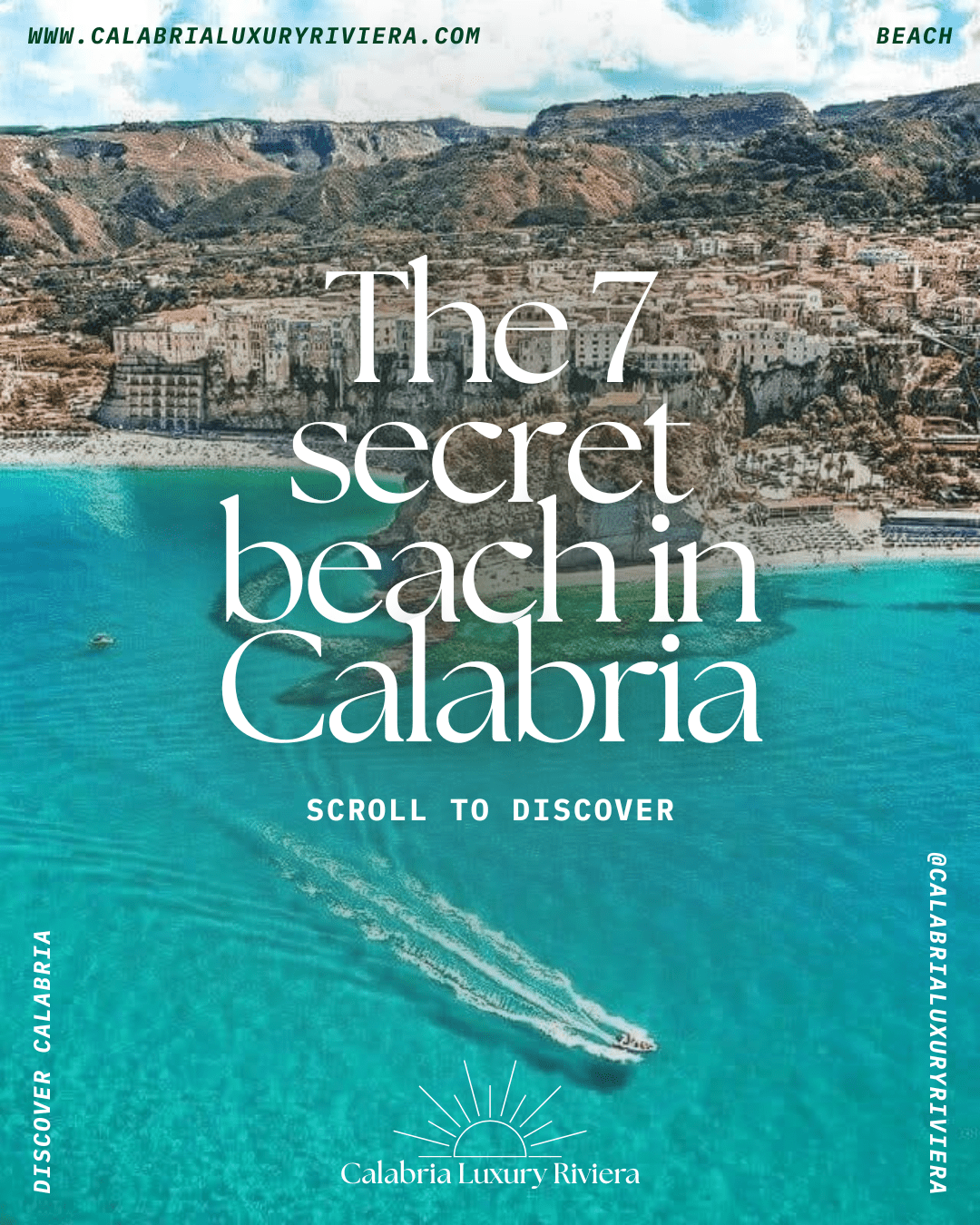
Coves the world has not yet learned to crowd. A curated edit, beach by beach.
There is a Calabria that begins where the maps end. The region’s coastline runs for more than seven hundred kilometres — the longest of any in the Italian south — and most of it is still unfamiliar to the international traveller. This is not Tropea on an August afternoon. This is what comes before, what comes after, and what hides between.
We have chosen seven beaches. Not the most famous — those are easy to find. The ones that ask a small effort of you: a winding road, a boat, a walking path through dwarf palms and agave. The ones whose names the locals offer reluctantly, only to those they sense will respect them.
Each is a Mediterranean of its own. Some are turquoise like Tropea, but emptier. Some are dark and dramatic, their sand the colour of old copper. Some are reachable only by water, which is its own form of privilege. None has a parking lot that fills before ten in the morning.
What follows is not a guide for the curious. It is a guide for those who have already understood that the most beautiful Italy is the one with the fewest signs.
1 · Cala dell’Arcomagno · Praia a Mare
A natural rock arch frames the Tyrrhenian like a doorway. The cala is reached by a narrow path winding between boulders, or — as locals prefer — by paddleboard from the wider Marina di Praia just south. Inside the arch the water is implausibly clear; the beach itself is small, shaped like a half-moon, capable of holding perhaps thirty people in conversation rather than competition.
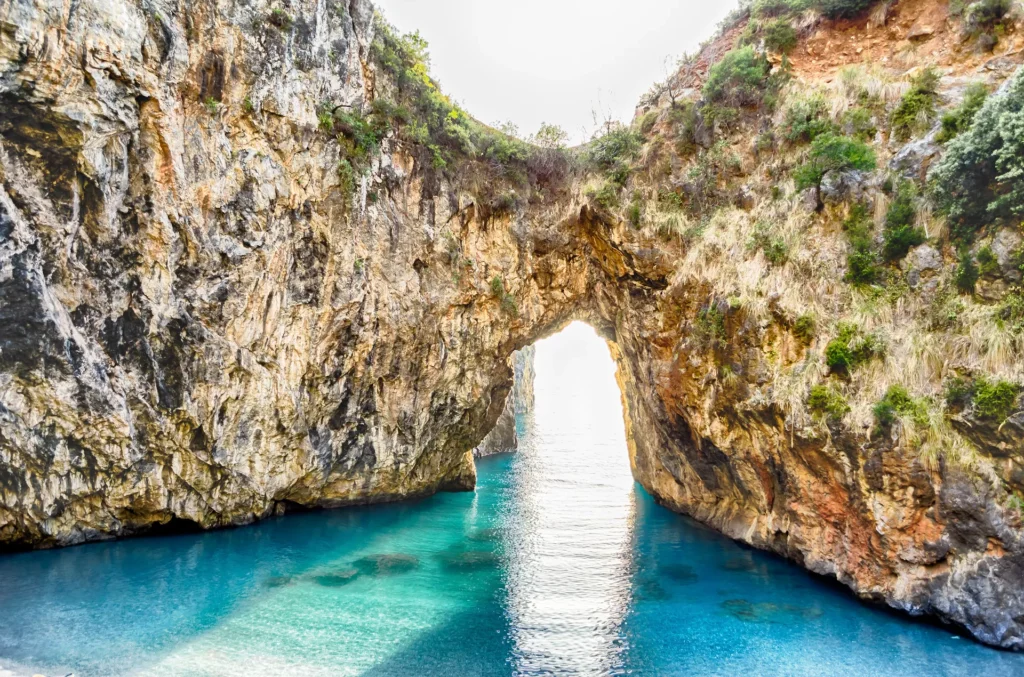
The arch is at its best at sunset, when the light passes through the opening and gilds the sand for ten minutes before the colour fades. Bring nothing but water and a book. There are no kiosks here, no umbrellas to rent. That is the point.
2 · Spiaggia di Riaci · Parghelia
A quiet sister of Tropea, ten minutes north along the coast road. Sandstone cliffs in the colour of bone, white sand, water that moves from emerald to ink within twenty metres. The reason it remains hidden is geographic: a steep stone stairway down from the road keeps the beach small and the crowd self-selecting.
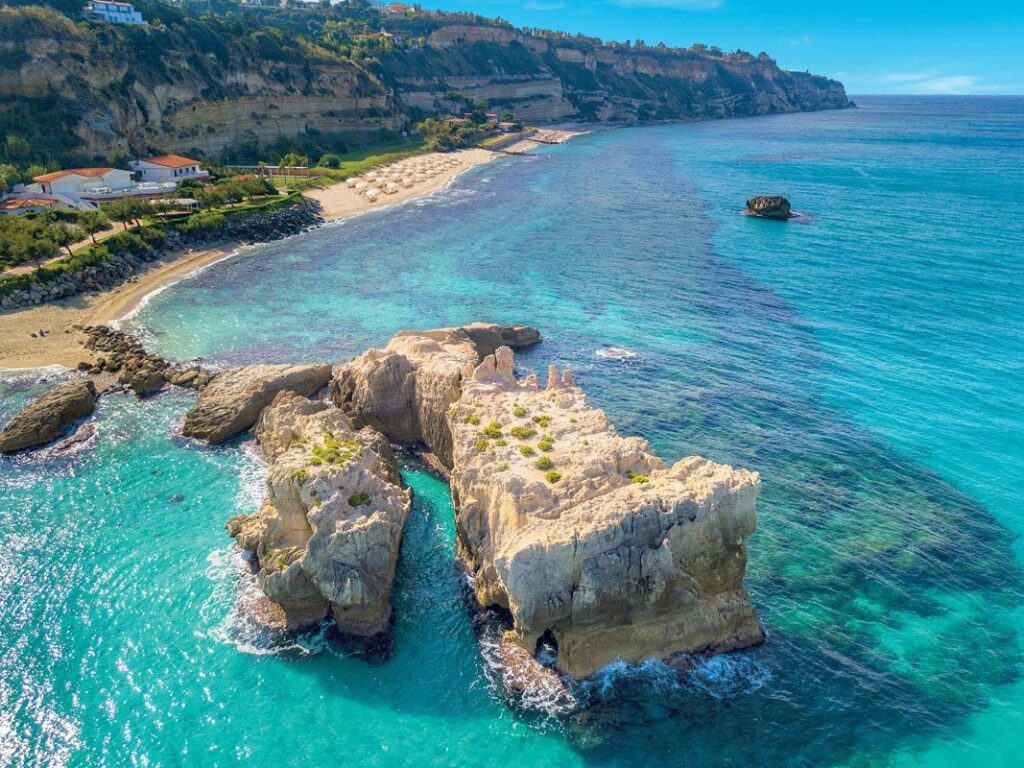
There is one lido, modest, run by a family that has kept the same recipes for three generations — order the fileja with bottarga and the vino della casa. Beyond the rocks at the southern end, an outcrop called the Scoglio di Riaci breaks the surface, and the colours of the seabed are visible from above as if drawn by a painter who refused to use anything but the cleanest pigments.
3 · Grotticelle · Capo Vaticano
Three coves separated by low pink cliffs, each with a slightly different temperament. The first is the most sheltered, ideal for those who prefer the calm of an inland lake. The second holds a small reef ten metres out, where you can swim with the same fish that visit the harbour at Tropea. The third is wilder, with rocks rising from the water like sleeping giants — the kind of place where you understand why the ancients made gods of every promontory.
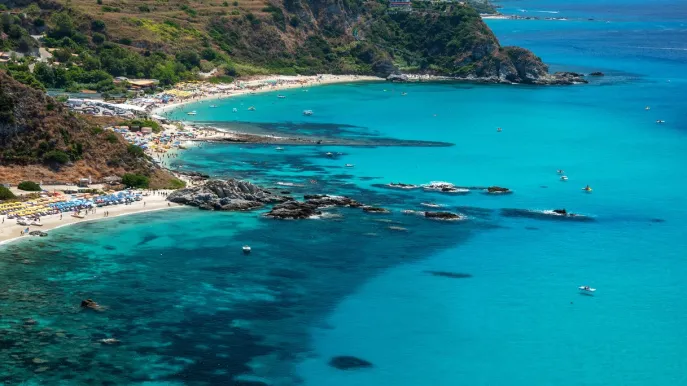
The sand is closer to the white of the Caribbean than to anything you’d expect of southern Italy. From the highest cliff above the third cove, on a clear evening, you can see Stromboli quietly erupting on the horizon, twenty miles out at sea.
4 · Spiaggia di Michelino · Parghelia
Reachable only by boat, or by a forty-minute walk through dwarf palms and old olive trees. Once you arrive, you find a single curving beach with a freshwater spring that feeds a small stream down to the sea — a detail that makes the beach unique on this stretch of coast. The locals come at dusk with picnics and stay until the stars are out.
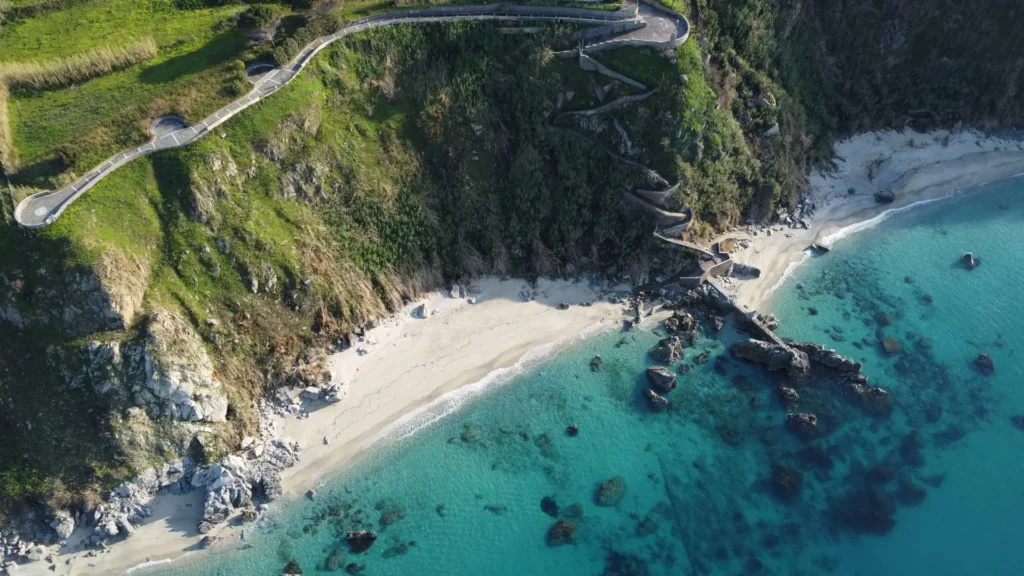
There are no facilities. No bar, no chairs, no umbrellas. The intention is preserved by the absence. On weekdays in May or June, you might be alone for the entire afternoon. Bring towels, water, and a willingness to be present without distraction.
5 · Caminia · Stalettì (Ionian Coast)
The Ionian sea is gentler than the Tyrrhenian, and Caminia is its quietest jewel. Two beaches divided by a small headland: the larger one with a single beach club where lunch is unpretentious and excellent (the spaghetti con le vongole is the dish to order, and the local rosé from Cirò is the one to drink). The smaller one is accessible only by climbing over the rocks at low tide — a small adventure that filters the crowd to those who want it.
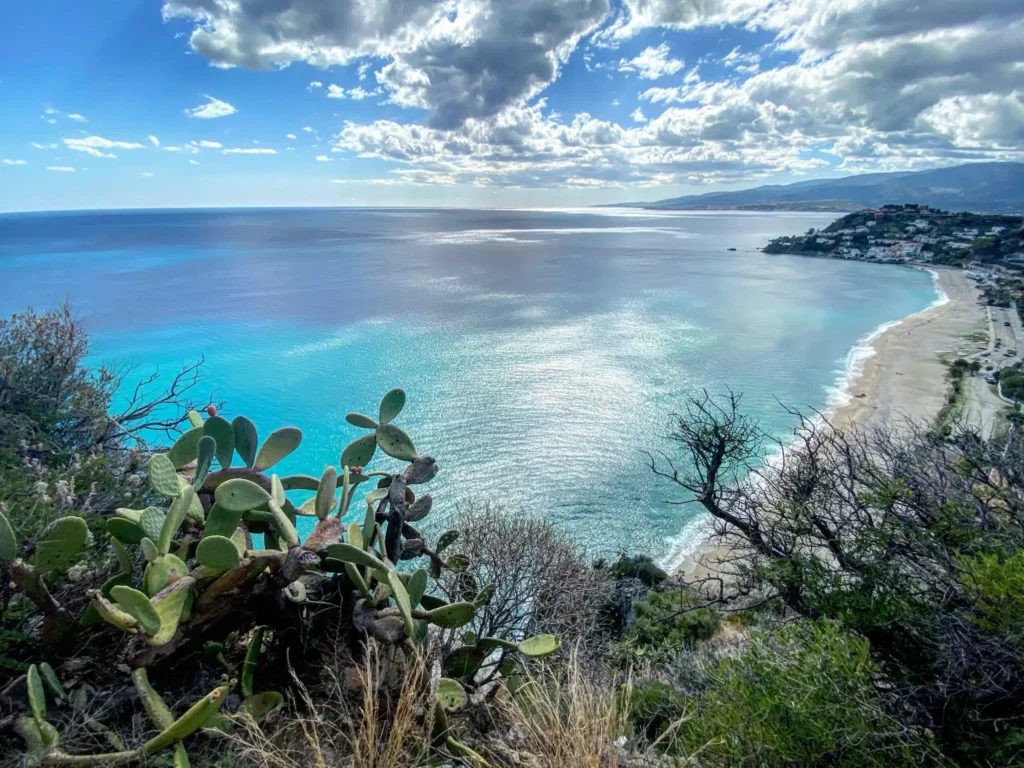
The water is shallow and warm, ideal for long swims that turn into reading sessions on a flat rock. The sand is golden, the cliffs limestone white, and the silence carries a kilometre in either direction.
6 · Spiaggia di Pietragrande · Soverato Marina
A long beach of white pebbles, not sand — which is exactly why it has remained less crowded than its neighbours. The pebbles make the water transparent in a way that sandy beaches never quite achieve: you can see your shadow on the seabed at four metres of depth, suspended like a small dark fish.
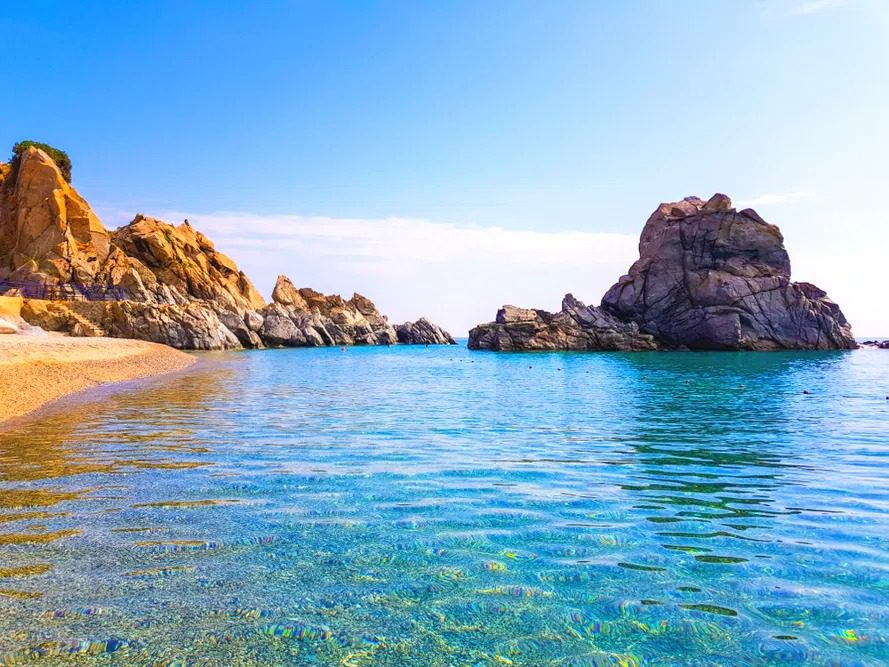
At the southern end of the beach, a series of caves carved by the sea were used as shelter by fishermen for centuries; the smell inside is of cool stone and salt. A handful of kayaks rent at one end of the beach; otherwise nothing else. No music. No vendors. The pebbles, the water, the caves, the long horizon. Enough.
7 · Capo Bruzzano · Ionian Coast
The wildest of the seven. A coastline of cliffs and small inlets, with archaeological remains from the Magna Graecia period scattered along the high ground — fragments of column, traces of foundations, the suggestion of a temple. The beach is reached by a path descending from a minor road; you pass cactus, agave, sea fennel, and olive trees that have been here longer than any of us.
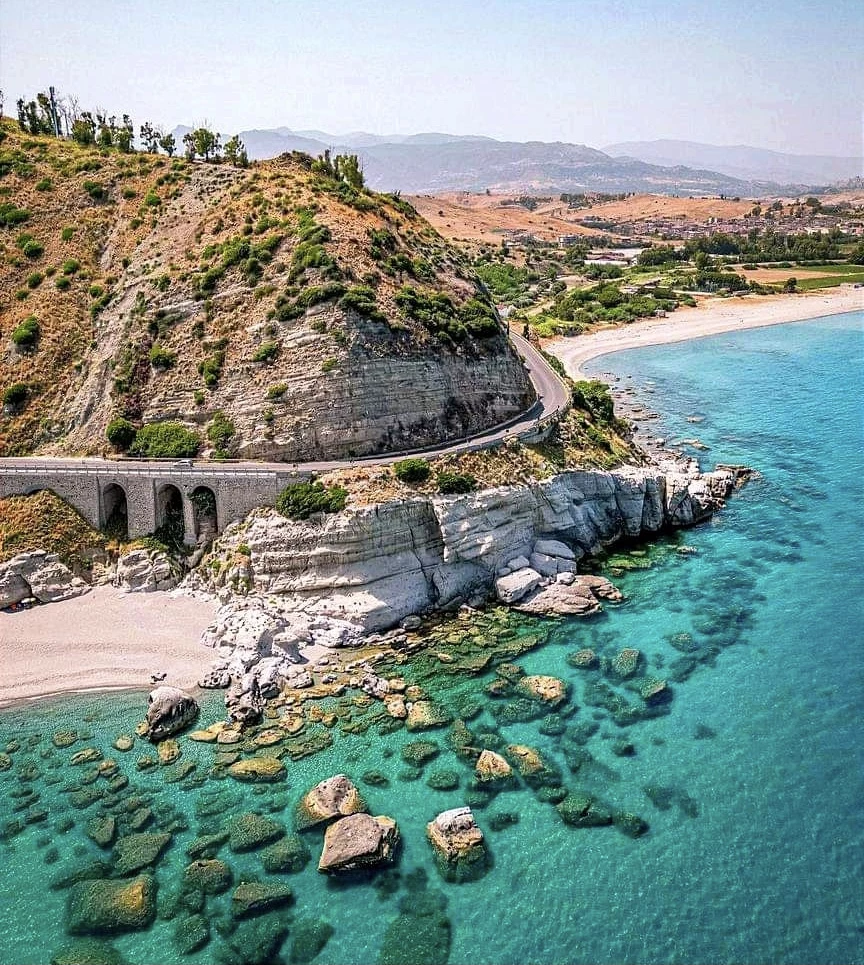
The sand is dark and warm. The water is the deep blue of the open Ionian. There is nothing here — no bar, no rentals, no signs to direct you. Just the sea, the cliffs, the wind, and the shadow of a Greek civilisation that knew, twenty-five centuries ago, that this was a place worth choosing.
Each of these seven is fragile. They have remained themselves because few have written about them, and many of those who knew first kept them as a kind of inheritance. We share them now with the same caveat: travel slowly, leave the place better than you found it, and carry your own water.
The map of Calabria’s coast is written in the conditional. Most of it could still surprise you.
You only have to look slightly past the obvious.
Lascia un commento